Foundations

The team had grown stagnant. Everyone felt it. We knew we needed to try something new. On the suggestion of our design director, our team decided to try out a new way of working as a experiment. We followed Lean UX patterns and had a small team of three design, test, and develop a new feature over a four-week iterative process based on an issue in the consumer Eventbrite space.
I held a brainstorming meeting with product managers, designers, and engineers and determined category pages provided us the best opportunity. This was due to a balance of technical feasibility and solving the user problem that users find our home page overwhelming and hard to browse.
Who we were solving for
Social scouts
Social scouts are the main drivers of Eventbrite. They are constantly looking for stuff to do in their area and beyond. They often pull together friends and family to attend events with them. They are curious, open-minded, and want to explore what’s out there.
Our project aimed to introduce new category-based browse pages to allow for Social Scouts to land on Eventbrite and explore our rich inventory of 24 categories and 190 subcategories. This type of functionality did not exist on the platform at the time.
Kick-off
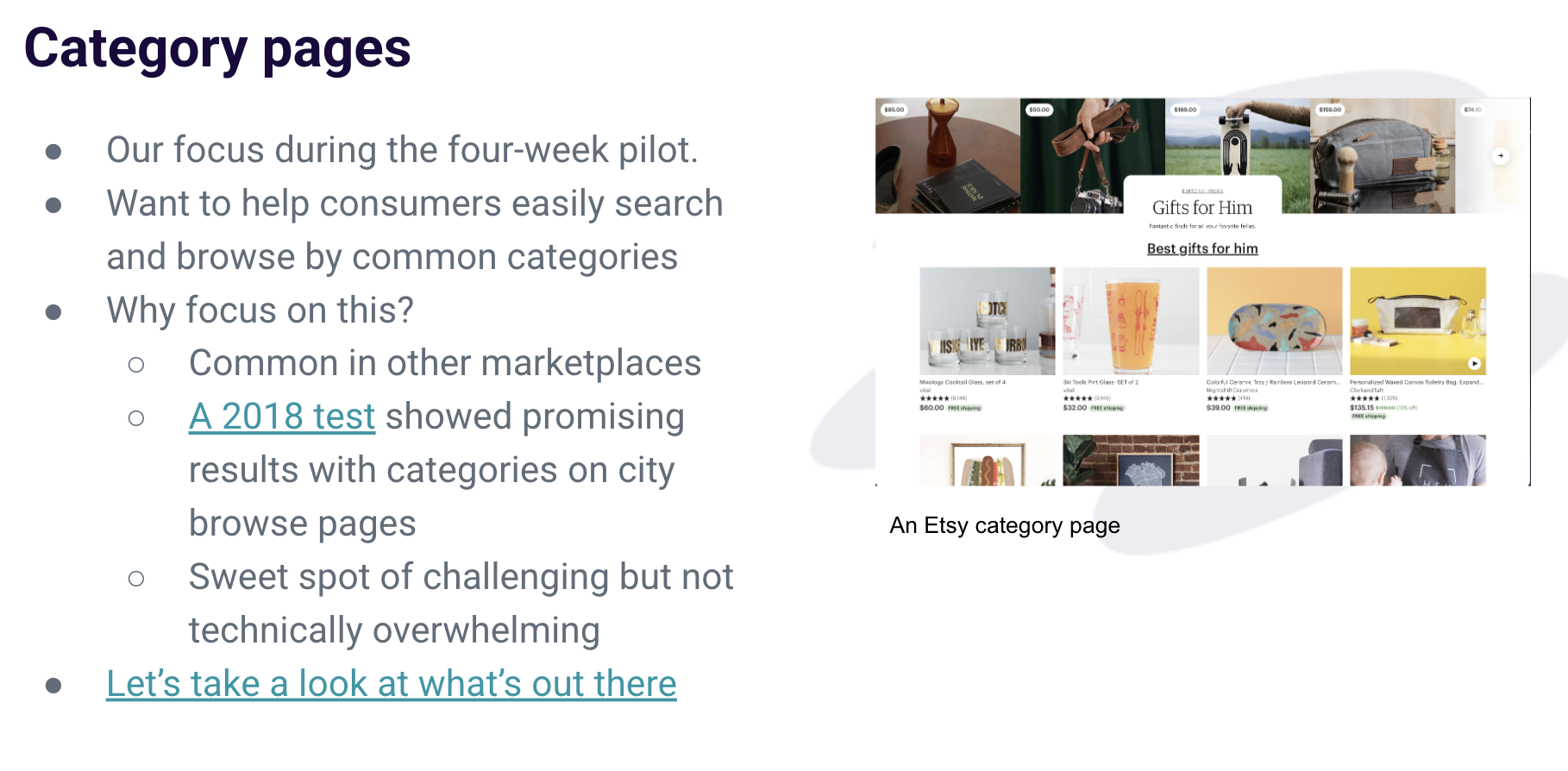
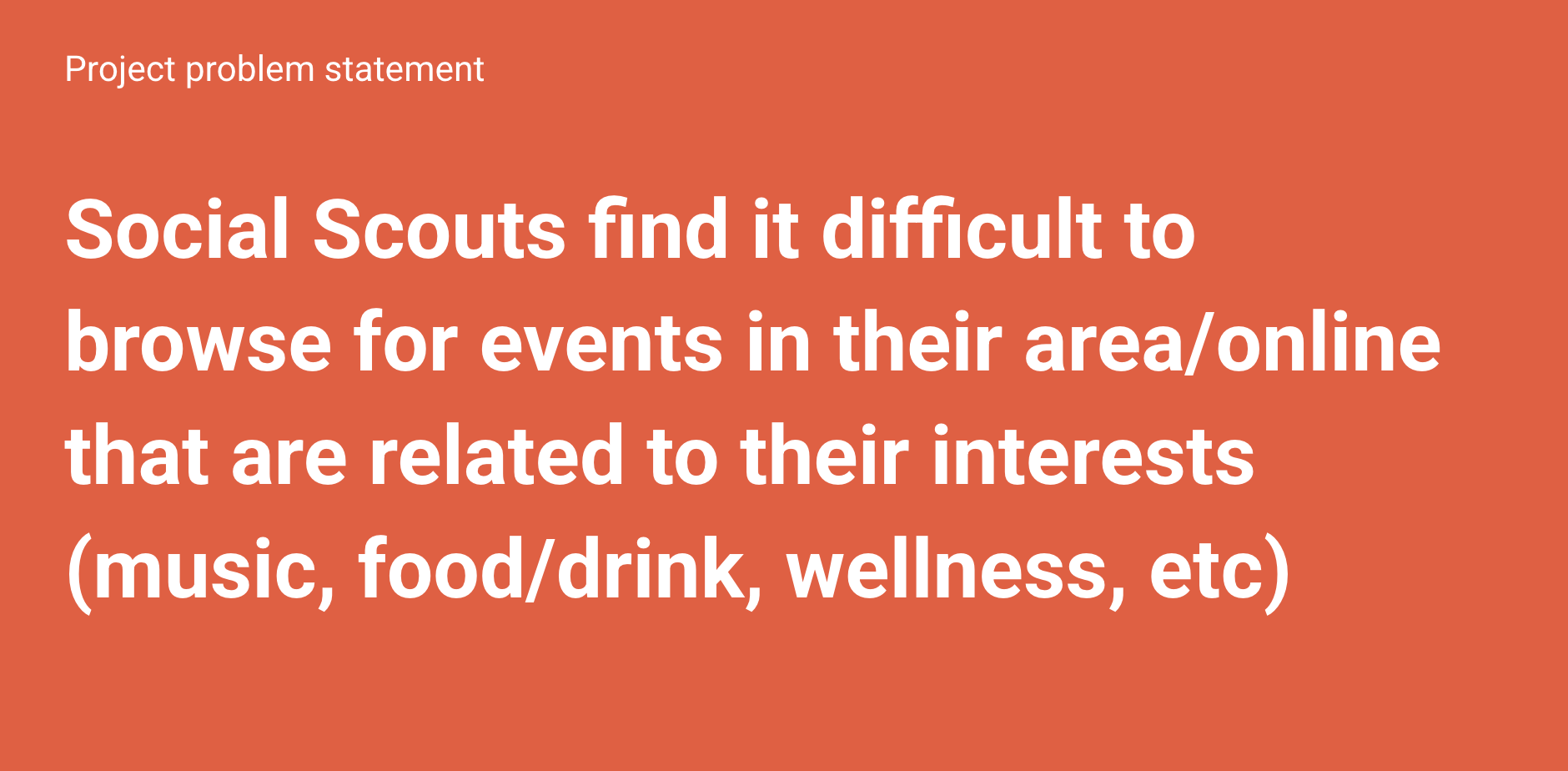
Due to the scrappy nature of the project, I led all product management, design, and research. A few days before we kicked off the project, I designed a brainstorming and kick-off session in which we could establish working agreements, craft a team problem state, and share ideas for strategy. It was attended by all members of the team and stakeholders.
Weeks 1-2
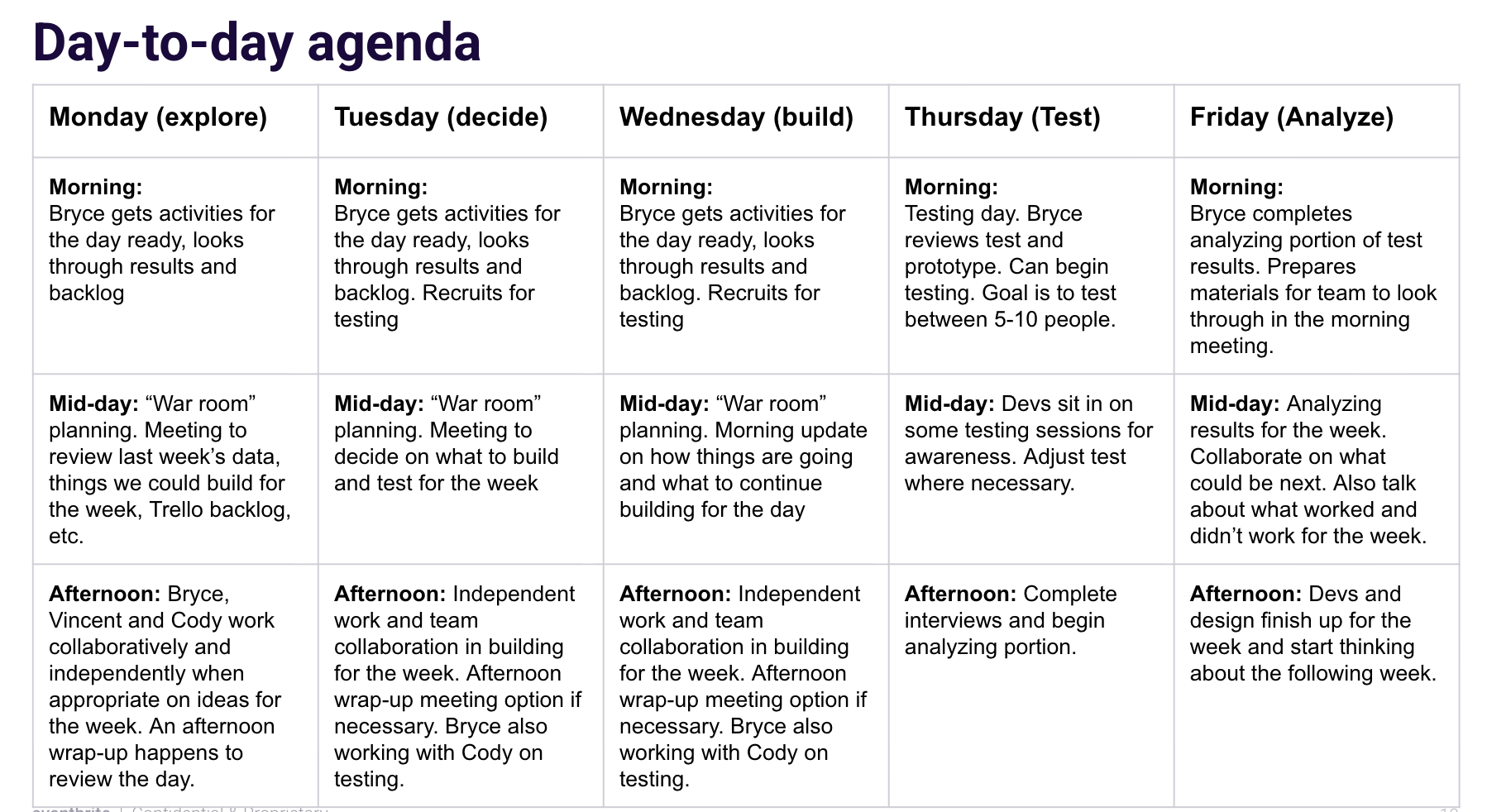
We had this agenda be our guide. This was something I developed to lead the project. Early in the week was all about exploring new ideas as a team and getting into testing with real users. We aimed to test with 5-10 social scouts. To build our testing pool, I used a Facebook group, pulled interest, and scheduled testing sessions. After testing, we would come back together on Friday, decompress, talk about how the week went, and then plan for the following week.
Early designs


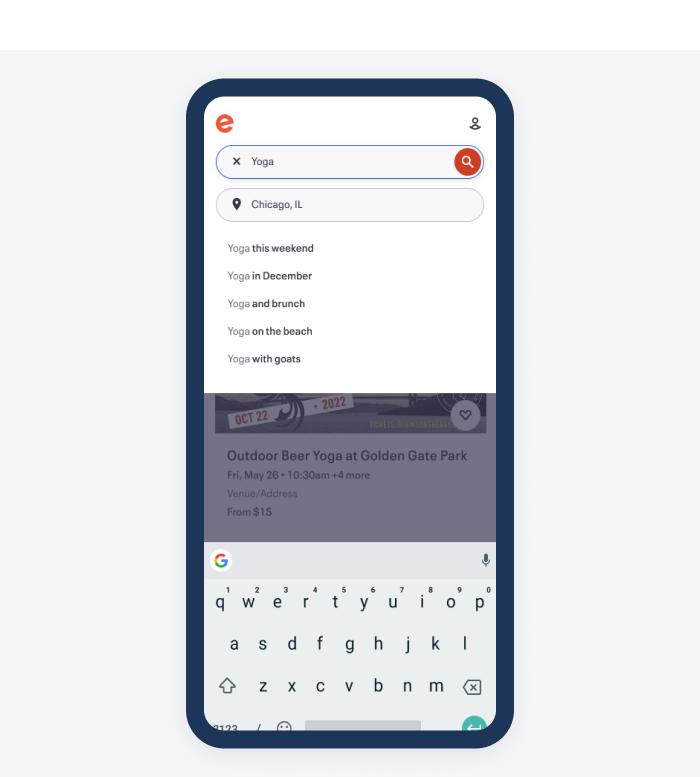
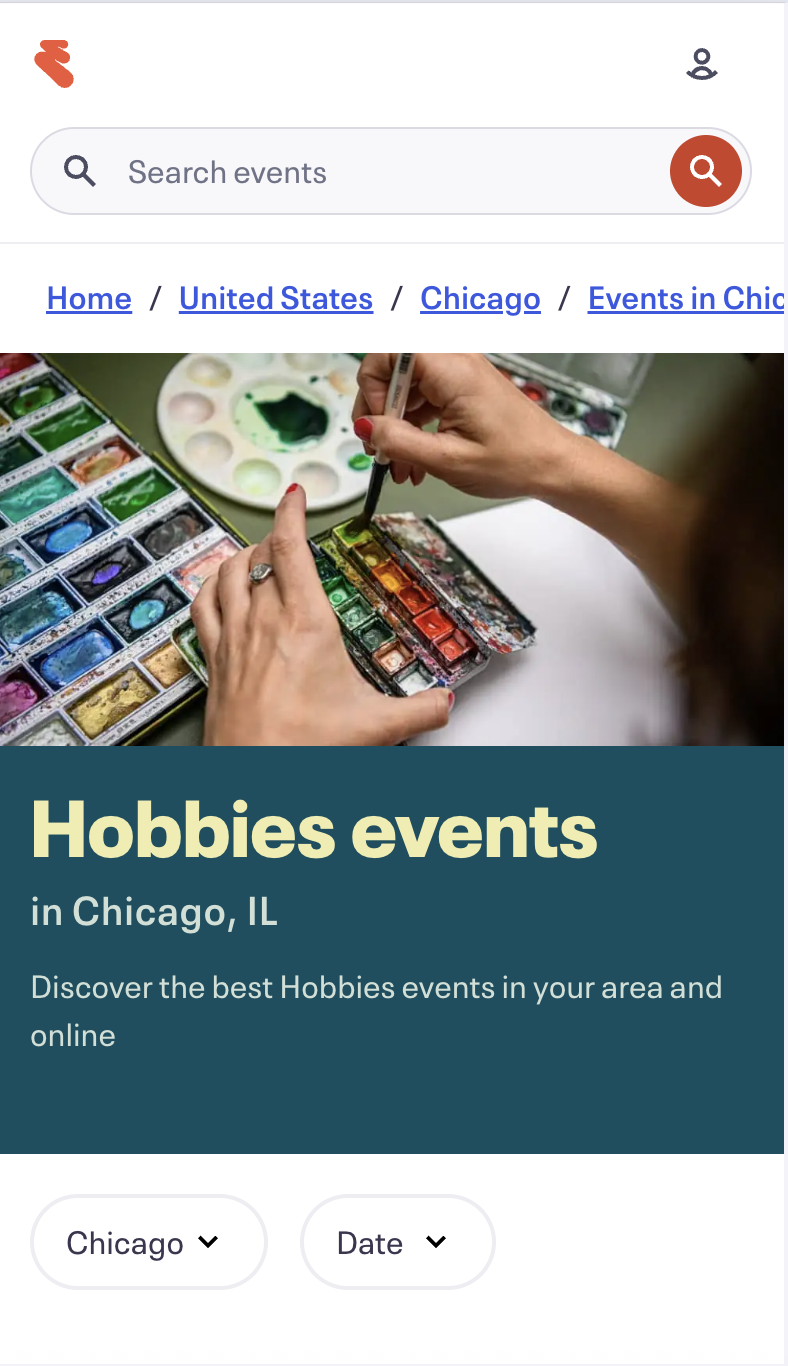
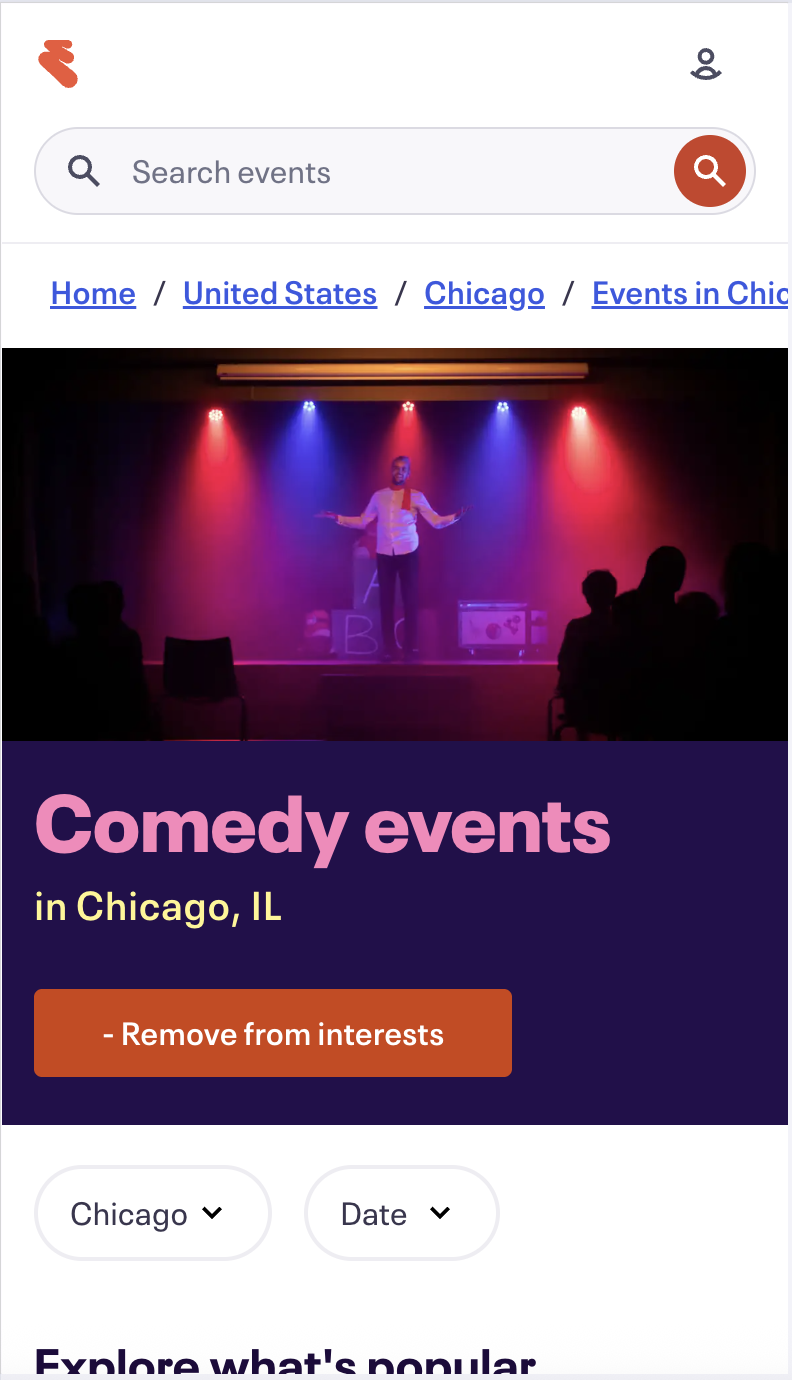
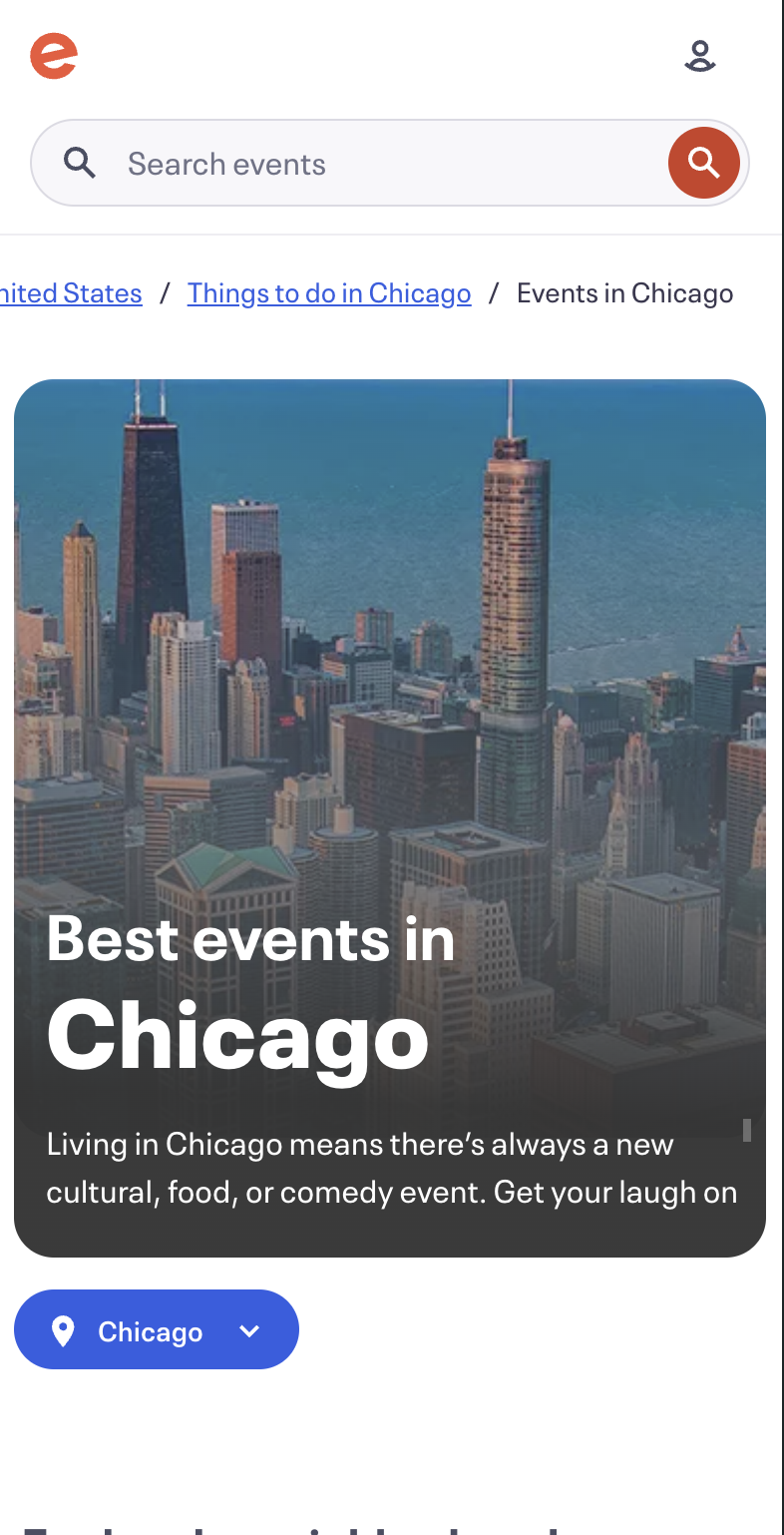
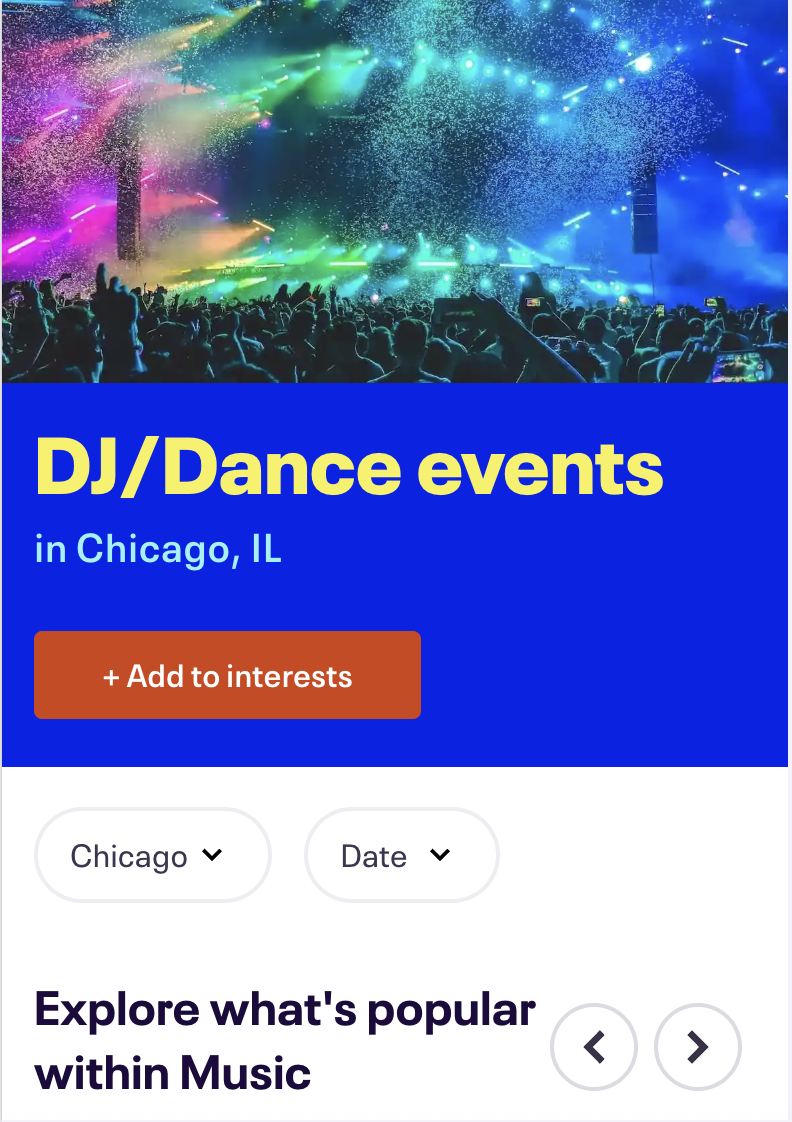
In our first week of our week we tried to set up effective processes and structures to govern our time on the project. We set up Trello boards, user testing sessions, and wireframes of different designs to test to try and get us set up for the remaining weeks. I also started putting down rapid ideas to try and come up with areas of intrigue and testing for users. Some things that came up initially was an explicit mention of location, and what to do about complex categories like Music. Should we invest the time and energy into subcategories?
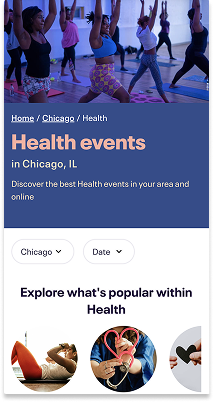
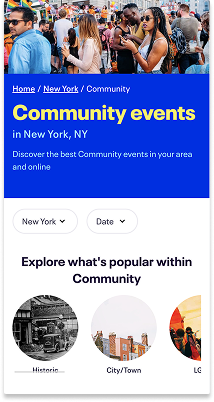
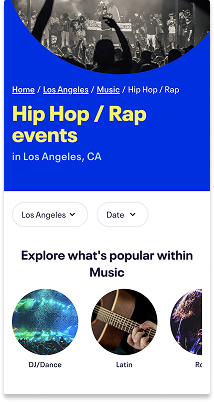
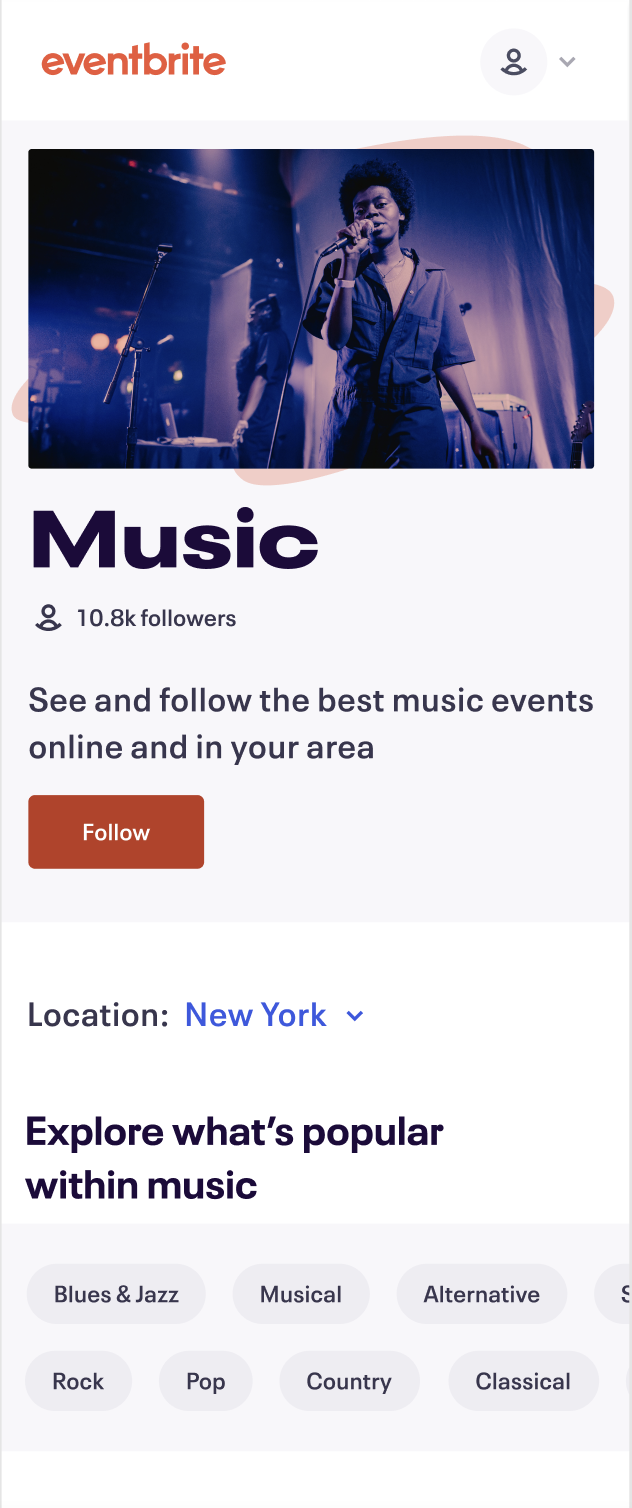
In week 2, we decided to continue down the subcategories path and started user testing multiple ways to navigate between category and subcategory browse pages. Users seemed to gravitate towards the subcategory pages. These pages became a bigger focus after user testing. You can see one of these options in the screenshot to the far right.
Weeks 3-4
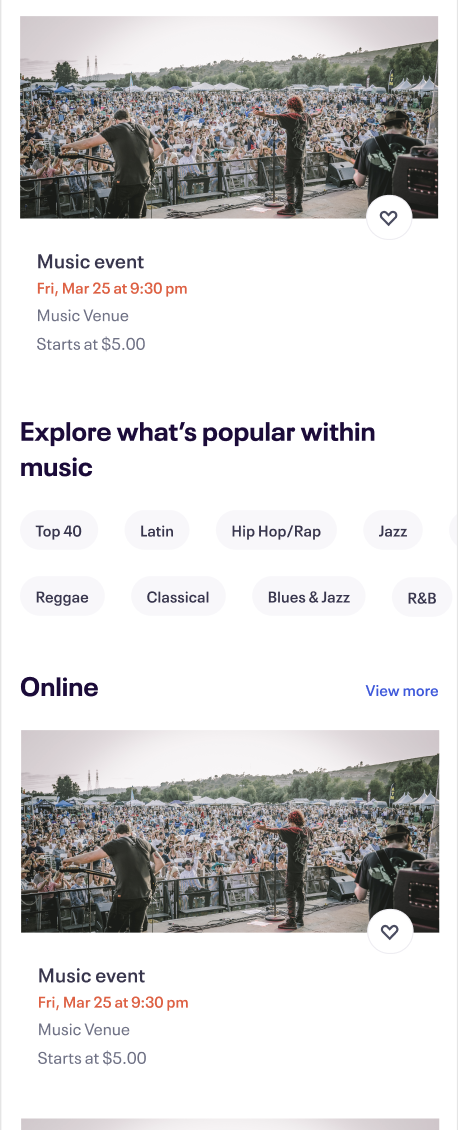
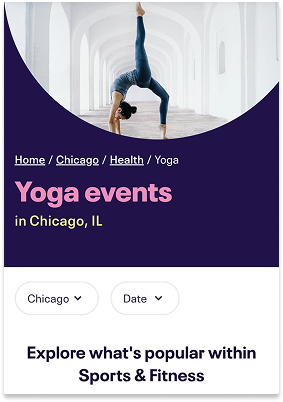
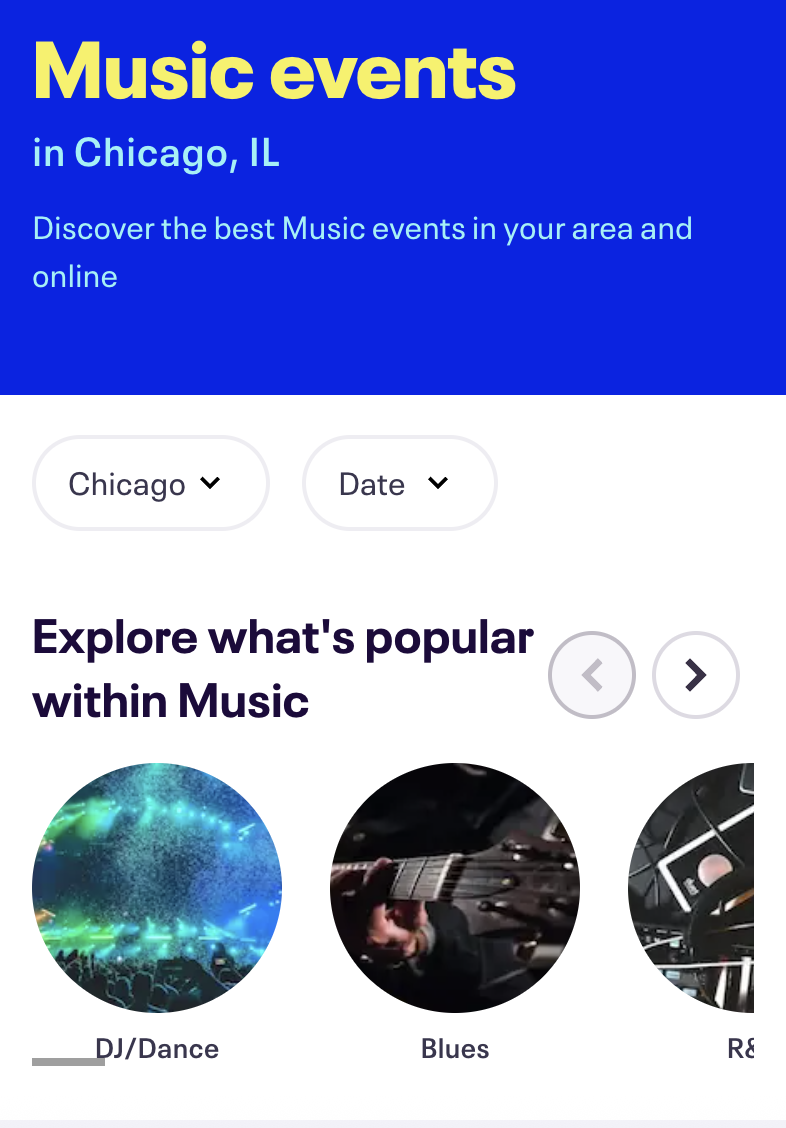
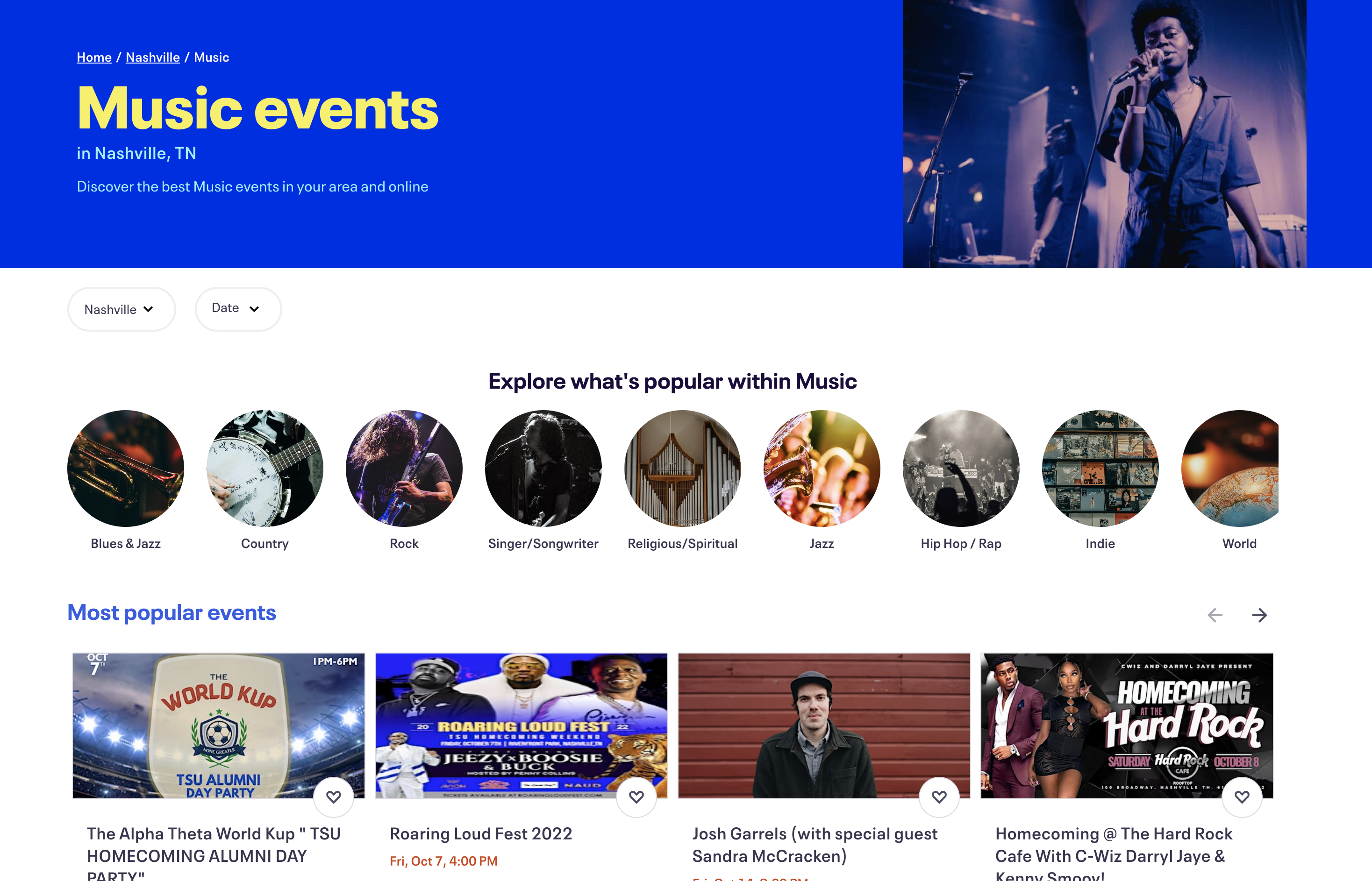
This was a concept we tried in Week 3. It didn’t get the intended behavior because users weren’t noticing the subcategories - limiting their ability to browse events.
Our team successfully set up a production-level environment that allowed users to test using real code and event data. This really expanded our speed and ability to update on-the-fly. We could have a few sessions with users, and then immediately go back, discuss changes, and rapidly deploy for later sessions in the afternoon.
We continued to iterate on where to place subcategories and how to get a more “browsable” feel to the product. You can see a design that wasn’t quite working in testing. Users weren’t noticing the subcategories and not really browsing because of it.
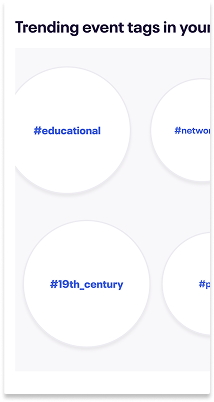
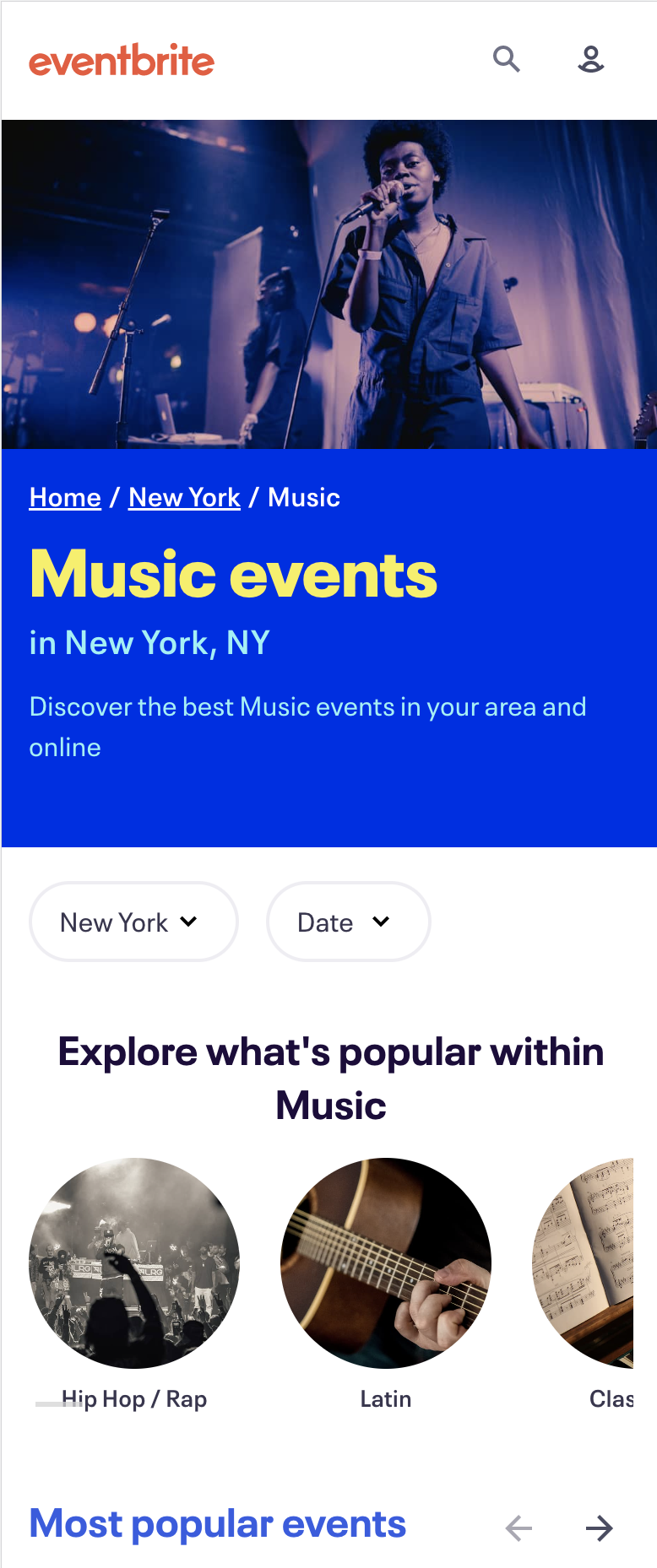
In Week 4, finally a breakthrough! We placed the subcategories more to the top of the category page. Our team was excited to see this perform well in testing and we exited the pilot feeling confident in our solution.
Week 4 Breakthrough!
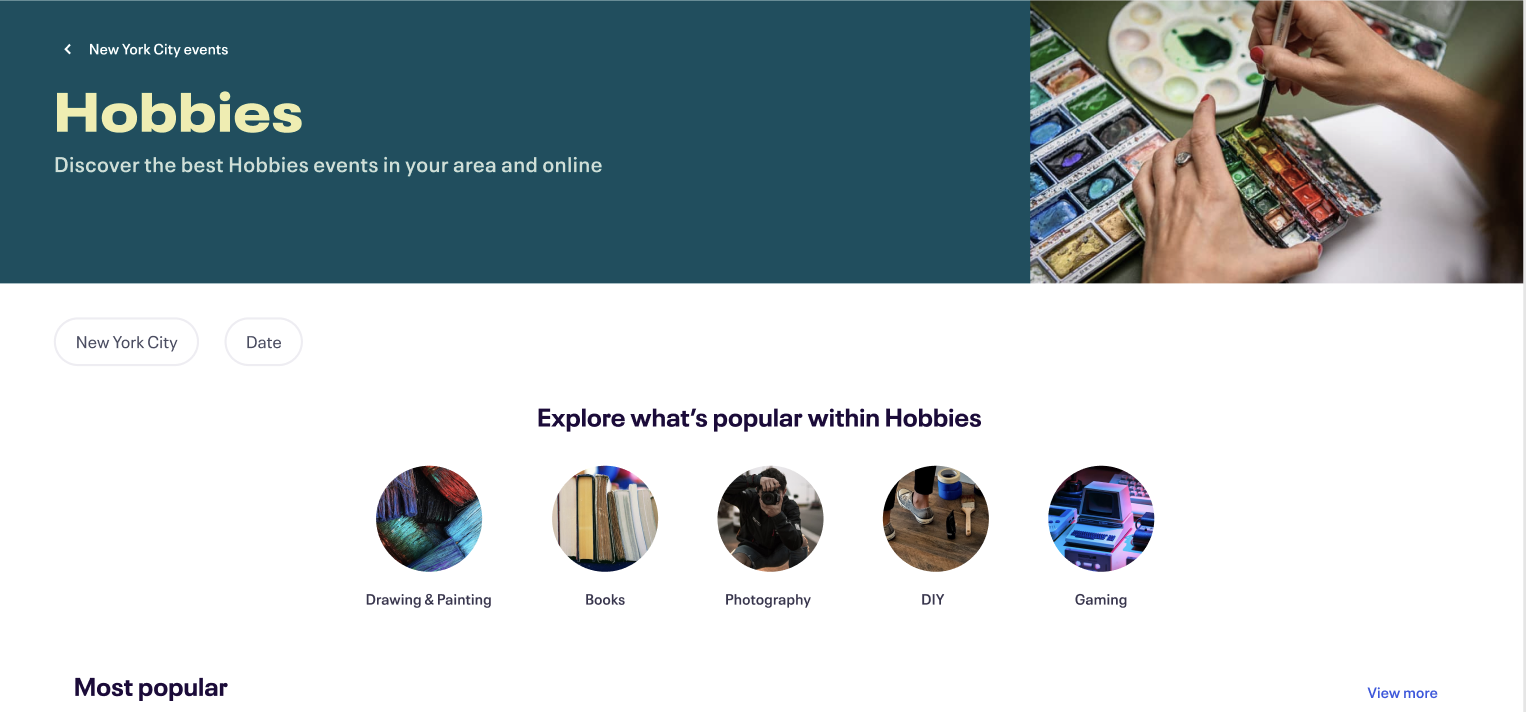
Moving the subcategories to this format enabled more browsing from consumers. We noticed in testing that users moved more seamlessly through the subcategories to fully explore our category offering. After the four-week pilot, we took a couple weeks to make sure were appropriately accounting for accessibility and SEO. When we released our category and subcategory pages they were available worldwide and performed better than the filtered search pages we were wanting to improve on.
On a process front, we successfully showed that we could plan and execute quickly to solve problems for users. Our small team presented to the entire company our Lean UX learnings. Soon after our pilot completed, the Eventbrite’s consumer team shifted to be more experiment-oriented and faster moving.
Results:
- Tripled clickthrough rates when compared to similar pages
- Fostered new Eventbrite experimentation culture by piloting Lean UX to accelerate iteration and releases.